Expansion Joint Fire Blanket for Fire Protection in Building Assemblies
Understanding Expansion Joint Fire Blankets
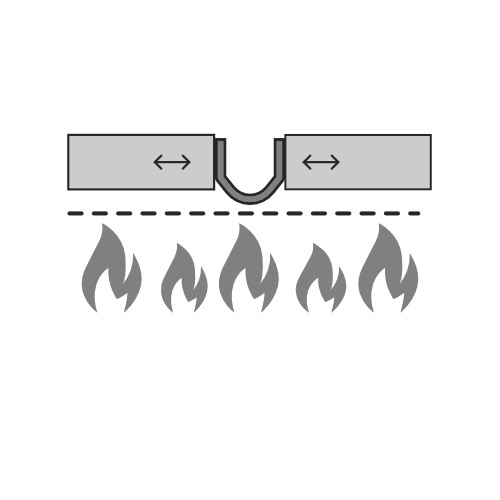
Did you know expansion joints can feed fires and allow them to spread between spaces quickly? Expansion joints need to be protected and properly sealed to prevent fire spread. An expansion joint fire blanket helps contain flames and smoke within one space.
Fire blankets are typically folded into the expansion joint to create tight seals and are commonly installed aligned to the interior face of the structure.
Fire Protection Requirements at Expansion Joints
When designing and selecting fire protection strategies for your expansion joints, you should consider certain specifications:
Building assembly type
Transition type
Joint width
Required fire rating
The line of fire protection must remain continuous throughout the entire expansion joint. All wall, floor, ceiling, and roof assemblies containing expansion joints must maintain a fire separation.
This includes transitions between building assemblies—such as where a floor turns up to meet a wall—ensuring the fire separation remains continuous.
Coordinating Fire Protection for Expansion Joints
Design TOgether with your Structural Engineer and Life Safety consultants to define what specifications must be considered when planning fire protection for expansion joints.
Then, collaborate with Expansion Joint manufacturers to select fire protection solutions suited to your building conditions and performance goals.
Key takeaways
By following these guidelines, you can ensure your expansion joints maintain the required fire separation and support safe building performance.
In summary, an expansion joint fire blanket helps prevent vertical and horizontal fire spread by ensuring a continuous fire-rated barrier across all transitions.
Ready to streamline your detailing into your design?
Discover how D.TO enhances your daily design workflows on D.TO’s key features page, or schedule a demo to explore them in more detail!!