Roof Edge Blocking for Secure Attachment and Thermal Performance
Understanding Roof Edge Blocking in Roof Assemblies
Did you know that insulation is not a suitable substrate for fastening building components? Roof edge blocking addresses this issue by providing a solid, stable base for attachment while supporting roof performance and durability.
Purpose of Roof Edge Blocking
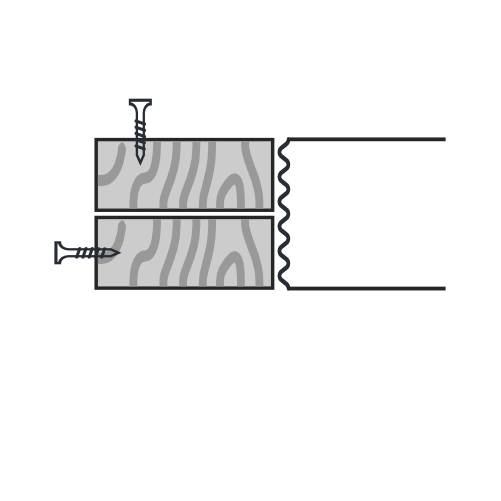
Roof edge blocking, typically constructed of wood, solves several common challenges in roof assemblies. Blocking provides a solid substrate for fastening exterior building components and supports roof curbs at expansion joints and other roof penetrations.
It is also used to support plywood, creating a smooth surface required for AWRB or membrane roofing to properly adhere.
Reducing Thermal Bridging with Roof Edge Blocking
Fasteners driven directly into the structure from exterior components create point thermal bridges at each penetration. By incorporating roof edge blocking, fasteners can be offset to reduce thermal bridging.
Using a combination of continuous and non-continuous blocking allows the thermal layer to extend while still providing the structural support needed for attachments and roof transitions.
Coordination and Installation Considerations
Work closely with product manufacturers and contractors to determine the appropriate roof edge blocking solutions for your specific project conditions. Proper coordination ensures the blocking integrates with insulation, air barriers, and roofing systems as intended.
Key takeaways
Roof edge blocking plays a critical role in providing attachment support, reducing thermal bridging, and supporting roof penetrations and transitions. Thoughtful placement and coordination help maintain both structural performance and continuity of the building envelope.
Ready to streamline Roof Edge Blocking Detailing into your design?
Discover how D.TO enhances your daily design workflows on D.TO’s key features page, or schedule a demo to explore them in more detail!!