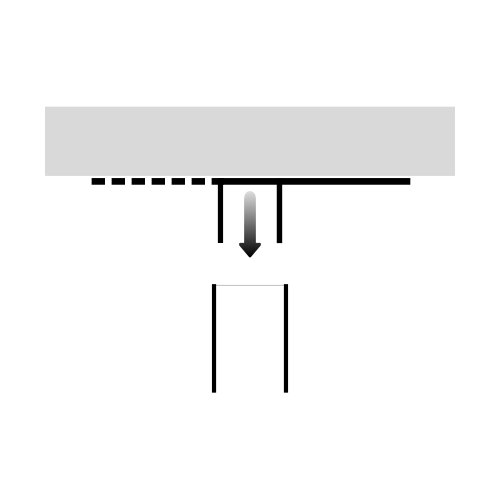
Did you know there are specific curtain wall anchor clips used at the head and sill of a curtain wall system?
Curtain wall F and T clips are specialized anchoring components used to connect curtain wall framing to the building structure. Their profile resembles the letters “F” and “T,” and they are commonly used to secure vertical mullions within conventional curtain wall assemblies.
The head and sill of a conventional curtain wall system are typically fastened using F and T clips. The legs of these clips are designed to fit into the open ends of the vertical mullions, creating a connection between the curtain wall framing and the structure.
These clips help transfer loads while maintaining the alignment and stability of the curtain wall system.
Although both clips serve a similar anchoring function, they are used in different locations within the curtain wall assembly:
Selecting the appropriate clip depends on the mullion location and the specific structural requirements of the façade system.
Proper clip selection requires an understanding of the loads acting on the curtain wall system. Structural loads, building movement, and project-specific conditions all influence the anchoring strategy.
Design TOgether with your Structural Engineer to determine the loads your curtain wall system must resist. This information can then be used when coordinating with product manufacturers to select the appropriate anchoring solution for the project.
Curtain wall F and T clips are essential anchoring components used at curtain wall heads, sills, jambs, and intermediate mullions. Understanding the role of each clip type helps ensure proper load transfer, alignment, and long-term façade performance.
Ready to streamline Curtain Wall Clip detailing into your design? Discover how D.TO enhances your daily design workflows on D.TO’s key features page, or schedule a demo to explore them in more detail!!
